
Showing 181 results

Authority records
1st Coniston Wolf Cub Pack
027 · Corporate body · 1948 - After 1962

Robert Baden-Powell's book, Scouting for Boys, was first published in England in 1908. Shortly after, Scouts began forming all over Canada. In 1910, a Dominion Council was established and Governor General Earl Grey accepted the position of Chief Scout for Canada. The Boy Scouts Association was incorporated in the United Kingdom two years later. In June 1914, a Canadian branch of that organization - The Canadian General Council of the Boy Scouts Association - was incorporated. In 1920, the International Conference, to which all recognized Boy Scout associations belonged, was formed.

The first meeting of the 1st Coniston Wolf Cub Pack, which was part of the Coniston Boy Scout Association was in October 1948. This 1st troop was affiliated with the All Saints Anglican Church and, in late 1948, a 2nd troop was formed which was affiliated with the Catholic Church (the French speaking boys attended Our Lady of Mercy Church while the English speaking boys attended St. Paul's Church). Both troops existed at the same time in Coniston and frequently participated in events and fundraising together. The 1st Coniston Wolf Cub Pack held their troop meetings on Tuesday nights, but they would have events, such as tobogganing parties and parades, on other days of the week. Regular activities of the troop included camping, hiking, first aid training, hockey, watching National Film Board movies, and father & son banquets. The troop was funded through various fundraising activities, such as candy sales on Valentine's Day.

In September 1956, the 1st Coniston Troop approached the 2nd Troop with the proposition of forming one group for Coniston. Bishop Dignan gave permission for boys from the 1st Troop to join, provided the 2nd Troop had control of the troop. During 1956 and 1957, the 2nd troop had difficulties recruiting Cub Masters who had the time to volunteer and the group folded by 1958 with the remainder of their bank balance being donated to the 1st Coniston Group Committee on November 12, 1962.

Presidents (Chairmen) listed in the scrapbook were:
Roy Snitch (1948 - 1949)
J. Rogerson (1952 - 1953)
Abramov, Ayala Zacks
CA-AA · Person · 1912-

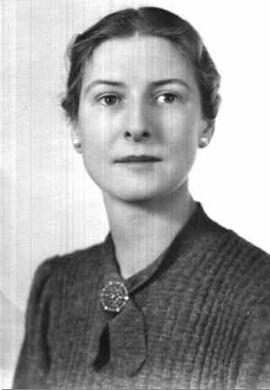
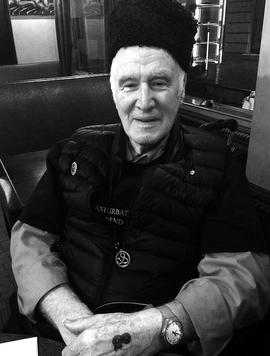
Sam and Ayala Zacks were prominent Canadian art collectors of international repute active in the mid-20th century whose gifts form the basis of the modern European art collection at the Art Gallery of Ontario. Ayala Ben Tovim Fleg Zacks Abramov (1912-) was born in Jerusalem and educated in Israel, Paris and London. In 1938 she married Maurice Fleg in Paris, and joined the French Resistance after her husband died in action in1940. Active in Zionist circles after the war, she met Sam Zacks in Switzerland. Samuel J. Zacks (1904-1970) was a financier, Zionist and art collector, born in Kingston Ontario and educated at Queen’s University and Harvard. Following their marriage in 1947 they immediately began to collect art of the School of Paris as well as Canadian and Israeli art and antiquities, amassing an extensive collection by the late 1950’s that was in continual demand by museums around the world. In 1956 a collection of Canadian art was donated to Queen’s University, Mr. Zack’s alma mater, the first of many significant gifts to institutions in Israel and Canada including the Hazor Archaeological Museum, the Royal Ontario Museum and the Art Gallery of Ontario. Mr. and Mrs. Zacks were both involved in international art circles, sitting on the Boards of the International Committee of Museums (ICOM), a branch of UNESCO, the International Committee of the Museum of Modern Art, the Art Gallery of Ontario and others. In 1969 Mr. Zacks received an Honourary Fellowship from St. Peter’s College, Oxford. He died in 1970 in Toronto. After his death, Ayala Zacks was awarded the Order of Canada and an honourary degree from the University of Toronto. She married Zalman Abramov, an Israeli lawyer and politician in 1976 and moved permanently to Israel in 1982.

APT Environment
S096 · Corporate body

APT Environment is an environmental organization in Elmira, Ontario, that is interested in the Chemtura Canada Company, formerly Uniroyal Chemical and Crompton Company. Since 1941 the plant has undergone various name and ownership changes. From 1966-2000 the plant operated as Uniroyal Chemical, from 2000-2006 as Crompton Company, and on July 1, 2006 formally changed its name to Chemtura Canada Company.

Art Institute of Ontario.
AGOAC00033 · Corporate body · 1951 - 1968

The Art Institute of Ontario (AIO) was incorporated in 1951 to circulate art exhibitions, lecturers, and instructional programmes to venues in smaller communities. The idea of an art institute had been discussed informally as early as 1948, and the Art Gallery of Toronto had organized circulating exhibitions. The AIO was formed when a grant from the Ontario Department of Education made it possible to sponsor a travelling exhibition throughout the province. Later grants from the Atkinson Foundation, the Canada Council, and the Province of Ontario Council for the Arts supported AIO’s operations. The AIO was an alliance of several Ontario visual arts institutions and organizations. Its founding members were the Art Gallery of Hamilton, Art Gallery of Toronto (now Art Gallery of Ontario), Hart House (University of Toronto), London Public Library & Art Museum, National Gallery of Canada, Ontario Association of Architects, Ontario Society of Artists, Royal Ontario Museum, Willistead Library and Art Gallery (Windsor) and the Windsor Art Association. The AIO maintained close ties with the Art Gallery of Ontario throughout its existence. It was absorbed into the extension programme of the AGO in 1968.

BHS0001 · Corporate body · 1948 -

The Arts and Letters Club of Burlington, Ontario was formed in 1948 by a small group of dedicated women as an out-growth of the Roseland Book Club. Its purpose was to develop interest in literature and the arts, through the circulation of books, lectures on literary topics, art, music, films and drama. The early meetings were held in the Lion’s Club Hall, later in Trefoil Lodge, and then in the Burlington Central Library.

Bagnani, Gilbert, 1900-1985
AGOAC00541 · Person · 1900 - 1985

Gilbert Forrest Bagnani (1900-1985) was a professor of ancient history. He was born in Rome to General Ugo Bagnani and Florence Dewar. He served as a Second Lieutenant of artillery towards the end of World War I. After the War he returned to the University of Rome where he received his doctorate. Instead of entering law as he had planned, he turned to the Italian School of Archaeology in Athens to study antiquities. In 1929 Gilbert married Mary Augusta Stewart Houston (1903-1996) of Toronto, daughter of Stewart Houston (editor of "The Financial Post") and Augusta Robinson (daughter of John Beverley Robinson, Lieutenant-Governor of Ontario, and granddaughter of Sir John Beverley Robinson, Chief Justice and Attorney-General of Upper Canada). Gilbert and Stewart had an apartment in Rome and for seven seasons worked, in the Sahara Desert, with the Royal Archaeological Mission to Egypt. In 1937 they fled fascist Italy and purchased a 200 acre farm and house built around 1845 near Port Hope, Ontario and named it "Vogrie". In 1945 Gilbert was invited to teach ancient history at the University of Toronto and in 1958 became a Professor. He retired from the University of Toronto in 1965. The Bagnanis returned to "Vogrie". In the same year, Gilbert was asked to accept a term-appointment at Trent University. He was honoured with a LL.D. by Trent in 1971 and he continued to teach as a Professor of Ancient History until 1975.

AGOAC00542 · Person · 1903 -1996

Mary Augusta Stewart Houston Bagnani (1903–1996), known after marriage as Stewart Bagnani, was an administrator at the Art Gallery of Toronto (now the Art Gallery of Ontario) and a lecturer in fine art. Born in Toronto of a distinguished family, she was the daughter of Stewart Fielde Houston (1868–1910), manager of Massey Hall in Toronto and first editor of The Financial Post. Her mother was Augusta Louise Beverley (Robinson) Houston (1859–1935), daughter of Mary Jane (Hagerman) Robinson (1823– 1892) and John Beverley Robinson (1821–1896), mayor of Toronto (1856), member of Parliament in Ottawa (1872–1880) and Lieutenant-Governor of Ontario (1880–1887). Augusta Robinson was one of five children: John Beverley, Napier, Christopher, Minnie Caroline (d. 1923; from 1881 Mrs William Forsyth Grant) and Augusta herself (from 1898, Mrs Stewart Fielde Houston). Stewart Bagnani’s greatgrandfather was Sir John Beverley Robinson (1791–1863), Chief Justice of Canada West (now Ontario) from 1829 to 1862. (Mary Augusta) Stewart Houston attended school in England and in Toronto (Bishop Strachan School), and later studied art history in Rome, where she met Gilbert Bagnani.

After her marriage to Dr Bagnani in Toronto in 1929, Stewart Bagnani worked beside her husband in the excavations at Tebtunis entrusted to the Royal Italian Archaeological Expedition in Egypt of which Dr Bagnani was director. On site, she drew and painted watercolours (now at Trent University) of early Coptic church frescoes, and recorded observations of excavation workers and of local customs to accompany Dr Bagnani’s photographs. When Gilbert and Stewart Bagnani moved to Canada in 1937, they worked at enlarging the farmhouse on their estate Vogrie to accommodate collections of books and works of art. In the 1950s, a mural was commissioned for a room in the house from Canadian artist William Ronald (1926–1998) of the Painters Eleven. In 1951, while her husband was teaching at the University of Toronto, Mrs Bagnani became head of Extension at the Art Gallery of Toronto, a position she held until 1963. When Dr Bagnani accepted a post at Trent University in Peterborough, Ont. in 1965, Mrs Bagnani gave lectures there on fine art, worked on promoting the Mackenzie Gallery at the university and volunteered at Kingston (Ont.) Penitentiary. A pamphlet and transcripts of two lectures by Stewart Bagnani are in the library collection of the AGO.

After her husband died in 1985, Stewart Bagnani lived in Toronto until her death in 1996 at the age of 93. She was buried with her husband Gilbert in Cobourg (Ont.).

Baxter, Iain, 1936-
AGOAC00034 · Person · 1936 -

Iain Baxter, Canadian conceptual artist, was born in 1936 in Middlesbrough, England, and moved to Calgary, Alberta with his family one year later. While studying biology at the University of Idaho, Baxter met Elaine Hieber, whom he married in 1959. Following studies in the U.S. and Japan, the Baxters moved to Vancouver in 1964, when Iain accepted a teaching position at the University of British Columbia. In subsequent years, he also taught at Simon Fraser University and the Emily Carr College of Art. Early collaborative art ventures culminated in the development of the N.E. Thing Company in 1967. The company functioned as an “aesthetic umbrella,” allowing Iain and his wife to work collaboratively and anonymously to produce a wide range of art forms and projects. The N.E. Thing Co. was formally incorporated in 1969, with Iain Baxter as President and Elaine as Vice President; the two later became co-presidents. Elaine Baxter adopted Ingrid as her preferred name in 1971. Among the company’s projects was the Eye Scream Restaurant, in operation from 1977 to 1978. Following the Baxters’ divorce, the company dissolved in 1978. Iain Baxter returned to Calgary in 1981, where he taught at the Alberta College of Art. For a brief period (1983-84), he was employed as Creative Consultant to the Labatt Brewing Company. Since 1988, Baxter has lived in Windsor, Ontario, where he teaches at the University of Windsor. He married Louise Martin in 1984. Baxter’s work is particularly informed by the ideas of Marshall McLuhan and communications theory. He also cites the art of Giorgio Morandi, Zen Buddhism, and his early studies in biology and ecology as conceptual influences. Baxter has explored a broad range of media and genres, including vacuum-formed plastic, inflated vinyl, telex, polaroid prints, environmental art and multimedia installation. His work is included in the collections of numerous major Canadian and international galleries.

S098 · Corporate body · 197? -

The Beaver Valley Heritage Society began in the mid 1970s as a group of concerned citizens, and was incorporated in 1981 as a non-profit citizen's organization created to preserve and protect the natural environment of the Beaver Valley in Ontario. The Beaver Valley's territory runs through the four townships of Artemesia, Collingwood, Euphrasia and St. Vincent. It stretches over 25 miles, from Flesherton to Georgian Bay at Thornbury. The Beaver Valley Heritage Society endeavors to represent the interests of the Valley's residents and anyone who wishes to support the Society's objectives of opposing inappropriate development in the Valley. The Society supports development, provided it occurs in approved areas, and does not impact on wildlife, fishing, and the natural environment. The role of the Society is to present the views of its members in a coherent, concise and organized way to the decision-making bodies that have jurisdiction over the Beaver Valley.

Bennett, Paul, 1928-
AGOAC00076 · Person · 1928 -

Paul Bennett was hired as the AIO’s first Field Director / Adviser in 1959, and remained in this capacity until 1964. He then became Director, serving until 1968.

Bernhardt, Clara, 1911-1993
AC0003 · Person · 1911 - 1993

Clara Bernhardt (1911-1993) was a poet, novelist, composer, and columnist, who lived in Cambridge, Ontario. At the age of eleven she was stricken with polio and confined to a wheelchair. Although she was unable to pursue more that a Grade 8 education, Bernhardt wrote poetry, articles, and stories. Her newspaper columns circulated in Canada and the United States for more than sixty years, and she was a columnist for the Preston Times Herald (now the Cambridge Times) for thirty years. She published three volumes of poetry, two novels, and a book of songs. In 1991 Clara Bernhardt was presented with the Order of Ontario.

Bibby, Charles
035 · Person · 1880 - 1970

Charles Bibby was born in Manchester, England on September 15, 1880. The son of a Confectioner, Bibby was the oldest male of four children. After studying accounting and becoming a public accountant, Bibby immigrated to Canada with his wife Mary Swain (1881-1967) in March 1903. The couple settled in North Bay where Bibby worked as a clerk, and later as an accountant for the Canadian Pacific Railway (CPR).

The Bibby family suffered several tragedies while in North Bay with the deaths of three daughters (Isabella Bibby June 1902 [Lancashire, England] - January 10, 1904 [North Bay, cause: bronchitis for 2 weeks], Georgina May Bibby September 14, 1904 - August 28, 1905, [cause: diarrhea for 3 weeks], and Beatrice Bibby October 1, 1905 - September 3, 1906 [cause: diarrhea for 5 weeks]). On October 19, 1910, the couple had their last and only surviving child Charles Fredrick Bibby (who later became Warden Bibby with the Ministry of Natural Resources). Shortly afterwards (before June 1911), the Bibby family moved to Sudbury due to a transfer with the CPR.

While in Sudbury, Charles Bibby continued to work for the CPR and later gained employment as an accountant for the Sudbury-Copper Cliff Street Railway until his retirement in 1945. He also belonged to the Nickel Lodge 427 of Ancient Free and Accepted Masons (he was initiated in Sudbury in 1918, became a Worshipful Master in 1924 and a Grand Steward in 1959) as well as the Tuscan Chapter 95 Royal Arch Masons, Mavar Preceptory 65, the Sudbury Shrine Club, and Rameses Shriners Temple in Toronto.

In 1928, Charles Bibby was elected mayor of the Town of Sudbury and was re-elected in 1929, the year before the town became a city.

Charles Bibby passed away on August 7, 1970 at the age of 89.

Birtch, Jim.
S097 · Person

Jim Birtch (19-- - ) is the Executive Secretary of the Canadian Biosphere Reserves Association, a non-profit association incorporated in 1997, to provide support and networking relationships that help develop and maintain biosphere reserves throughout Canada.

Blair, George, 1852-1935
BHS0005 · Person · 1852 - 1935

George Blair (1852-1935) was a prominent member of the Burlington, Ontario community as a builder and fruit farmer, an elder and treasurer of Knox Presbyterian Church and a municipal councillor. He also served several terms on both the public and high school boards and was also a member of the Fruit Growers Association. Many of the houses that Blair built are still standing and several of them have plaques from the Burlington Heritage Committee. Blair was born at Harper's Corners, Ontario and as an adult, lived and worked as a carpenter in Kilbride. In 1886, he built a home for his first wife, Lorentia (nee Parkin) and their family at 472 Burlington Avenue, Burlington. In 1893, the now-widowed Blair married Hannah Smith (nee Shepherd), who was also widowed. George Blair feared the effect of city living on their sons and so bought a 50-acre fruit farm on Brant Street. Though rural in character, it was still within the boundaries of the Town of Burlington. Together, the couple raised their several children: George's two sons H. Melvin and Ferguson G., and daughter, Mary Grace, Hannah's two sons, Henry Melvin Smith and Edward (Ted) Shepherd Smith, as well as the couple's sons George Stanley and John Nicoll, and daughters Eva Marion and Mabel Beatrice.

Booth, Gotthard, 1899-1975
AC00345 · Person · 1899 - 1975

Gotthard Booth (1899-1975) was a medical doctor specializing in the practice of psychiatry concerned with chronic physical diseases, psychosomatic medicine, and studies in the relationship between religion and health. Born in Nuremberg, Germany, Booth graduated from the University of Munich Medical School in 1923, and in the early 1930s moved to the United States. He resided in Westport, Connecticut but maintained a practice in New York City. Booth taught at Columbia University from 1945 to 1953, was instructor for one year at the New York Medical College, and from 1962 was consulting psychiatrist for the Union Theological Seminary, New York. In 1965 he became a visiting lecturer at Waterloo Lutheran University (now Wilfrid Laurier University) and its federated college, Waterloo Lutheran Seminary. A fellow of the American Psychiatric Association, Booth's research resulted in the publication of more than 60 articles. He worked as a research associate with the New York Psychiatric Institute for ten years. He was also a member of the American Psychosomatic Society, the Academy of Psychosomatic Medicine, the New York County Medical Society, and the American Medical Association.

Boy Scouts of Canada
012 · Corporate body · 1914 -

The scouting movement was founded in England in 1907 by Robert Baden-Powell, then a lieutenant-general in the British army. Scouting came to Canada in early 1908 with three troops established almost simultaneously in Merrickville and St Catharines ON and Port Morien, NS, and in 1912 the Boy Scout Association was granted a royal charter throughout the Commonwealth by King George V. The Canadian General Council of the Boy Scout Association, incorporated 12 June 1914, was a branch of the Boy Scout Association until 30 October 1946 when it became an independent member of the Boy Scout World Conference. The name was changed to Boy Scouts of Canada and to Scouts Canada in 1976.

Boyle, John B., 1941-
AGOAC00689 · Person · 1941 -

John Bernard Boyle (1941- ) is an artist, activist, curator and writer who has lived and worked in St. Catharines, London, Elsinore, and Peterborough, Ontario. He married Janet Perlman, with whom he has one daughter, Emily. Boyle was educated at London Teachers’ College and the University of Western Ontario, and is self-taught as a painter. He taught elementary school in St. Catharines intermittently between 1962 and 1968. In 1974 he moved with his family to a converted church in Elsinore, Ontario (near Owen Sound), where he had his studio until 2002. He is currently based in Peterborough. Boyle began to exhibit his paintings in 1964, the same year he was inspired by meeting London artists including Jack Chambers and Greg Curnoe. In 1966 controversy arose at the London Public Library and Art Museum over Boyle’s exhibited piece Seated Nude. Boyle was an early participant in London’s 20/20 Gallery. In 1972 he designed sets for the play Buffalo Jump at Theatre Passe Muraille, Toronto; that same year he curated the first Billboard Show in St. Catharines. In 1980 Boyle completed the mural Our Knell for Queen Subway Station, Toronto. From 1973 through the 1990s, Boyle exhibited regularly at Nancy Poole’s Studio, Toronto. A key figure among the artist activists who established professional representation and rights for artists in the early 1970s, Boyle was the founding spokesperson of Canadian Artists Representation Ontario (CARO) in 1971. In 1970 he served as the first president of the Niagara Artists Co-operative (later Company). Boyle was a member of the Board of Trustees of the Art Gallery of Ontario, 1975-1977. Boyle has written extensively in journals including 20 Cents Magazine, Parachute, and Twelve Mile Creek. His regular column “According to Boyle” in CAROT (1975-78) dealt with challenges facing artists. Boyle has written three novels, No Angel Came (1995); and the unpublished The Gergovnians and The Peregrinations and Permutations of a Young Artist in Canada. His illustration and book design work includes The Port Dalhousie Stories by Dennis Tourbin (1987), as well as several magazine articles and book jackets. He initiated the discipline of “Canadology” in 1989 to record the social customs of the country. Boyle is a founding member (since 1965) and principal kazooist of The Nihilist Spasm Band. His work is represented in numerous Canadian collections, including the National Gallery, the Art Gallery of Ontario and the Montreal Museum of Fine Arts.

Briere, Elaine
AC004 · Person

Elaine Briere is a Vancouver documentary-maker, photographer, journalist and social justice activist. Her documentary, Bitter Paradise: The Sell-Out of East Timor, won the best political documentary award at the Hot Docs Festival, North America’s preeminent documentary film showcase, in 1997. In addition to her work on East Timor, which includes a published collection of photographs (Testimony: Photographs of East Timor, Between the Lines, 2004), Briere has directed a documentary on Canadian merchant seamen, Betrayed: The Story of Canadian Merchant Seamen (1997), and has produced photo-journalism and print articles for "The Tyee", "Briarpatch", "Our Times", and other publications dedicated to labour and social justice issues. Briere’s photographs have appeared in many publications including, Carte Blanche Photography 1 (2004); The Other Mexico: The North American Triangle Completed (1996), South East Asia Tribal Groups and Ethnic Minorities (1987) and The Family of Women (1979). Her photographs have been featured in exhibits in Canada, Japan, Sweden and the United States.